

Introduction
In a world where the gap between the financial inclusivity haves , haves and have-nots continues to widen, the concept of financial inclusion is emerging as a powerful driver , driver of social , social and economic transformation. Seriously, Financial inclusion is more than a bank account – its access to our ability to save, borrow, insure, transact and build , build a secure future. According to the World Bank, it’s access to and use of financial products and services that meet people’s needs, are useful and affordable.
However, despite impressive technological advances, millions of individuals and businesses remain excluded from formal financial systems around the world. Addressing this exclusion is not just a matter of fairness: it’s critical to wider economic growth, social resilience and global stability. This article explores the meaning, challenges, benefits and pathways to true financial inclusion – and why it matters , matters now more than ever.
Table of Contents
What is Financial Inclusivity?

financial inclusivity is the state in that all individuals and businesses, regardless of geography, income, gender , gender or status, have , have access to and are empowered to use sustainable, relevant and affordable financial services. Like, its a shift , shift from simply opening a bank account to promoting meaningful participation in the financial system.
Key components and dimensions
- Access: The ability to open a payment, savings, credit or insurance account with reasonable cost and minimal barriers.
- Usage: Holding an account doesn’t guarantee meaningful use; inclusivity demands that account holders actively use services to save, invest, borrow, or protect.
- Quality and affordability: Services must be safe, transparent, suited to the needs of users, and cost‑effective.
- Empowerment and protection: Financially included persons should be literate, aware of risks, and protected against exploitative practices.
The term “financial inclusivity” thus encapsulates these dimensions—access + usage + suitability + protection.
Why Financial Inclusivity Matters
The importance of financial inclusivity spans economic, social and individual spheres.
Economic‑growth and poverty‑reduction benefits
When people can save securely, make payments, borrow responsibly and insure against life’s risks, they are better able to participate in economic activities: invest in education, start a small business, or recover after a shock. The World Bank notes that financial inclusion is a “key enabler to reducing poverty and boosting prosperity.”
Social stability and equality
financial inclusivity often aligns with other forms of marginalisation: rural residents, women, low‑income households, persons with disabilities. By closing those gaps, systems become more equitable. For example, services tailored to women help reduce gender disparity in finance.
Resilience and risk mitigation
Having access to financial services gives individuals means to handle emergencies, smooth incomes and build resilience. Without these means, vulnerable persons are forced into informal, high‑cost, risky alternatives.
The business and innovation case
financial inclusivity and fintech firms gain by tapping previously underserved segments—expanding customer base, developing innovative products (mobile wallets, digital credit). Thus financial inclusivity is also a market‑opportunity story.
Current Landscape and Global Trends
Global scale of exclusion
Despite progress, large gaps remain. According to data compiled by policy bodies:
- Roughly 1.4 billion people worldwide lack access to the formal financial system.
- Even among those with accounts, usage remains low in certain regions or segments, due to cost, distance, digital barriers or trust issues.
Digital transformation and its role
The rise of mobile money, agent banking, digital payments and fintech platforms has transformed access and cost‑models for underserved populations. These tools allow new ways for people to get payments, save small amounts, borrow micro‑loans and insure themselves using digital infrastructure.
The role of policy and regulation

Enabling financial‑inclusivity requires pro‑active policy: consumer protection, regulatory frameworks, digital infrastructure, alternative data for credit scoring, gender‑focused policy, rural outreach.
Illustrative table — Key global indicators
| Indicator | Description | Recent trend |
| Account ownership | Share of adults with an account at a formal financial institution or mobile money provider | Increased steadily in many low‑income countries |
| Active usage | Share of account holders using the account for savings, payments or credit | Lagging in several underserved groups |
| Credit/Insurance access | Ability to obtain a loan or insurance from formal sources | Still low for many rural, female or low‑income users |
| Gender gap | Difference in access/usage between men and women | Narrowing but persists widely |
(Source: World Bank, AFI, FinDevGateway)
Key Challenges to Achieving Financial Inclusivity
Even as opportunity expands, significant barriers remain.
Infrastructure and cost constraints
In remote or rural regions, low population density, poor network connectivity, limited traditional branch infrastructure raise cost of service delivery. These make it less attractive for financial institutions to serve such areas.
Low financial literacy and trust
Many people lack basic understanding of financial services, how to use them safely, or fear exploitation. Without trust, uptake remains low even if access exists.
Gender, disability and minority barriers
Certain groups face extra hurdles: fewer documents, cultural norms restricting access, location constraints, or digital exclusion. Tailoring is required to reach them.
Data, documentation and credit‑worthiness issues
Traditional credit scoring systems often exclude people without formal employment history or collateral. Alternative data and flexible underwriting are needed.
Regulatory and risk concerns
Extending services involves cost, risk of over‑indebtedness, fraud, money‑laundering. Balanced regulation is essential to protect consumers and ensure system stability.
Over‑indebtedness and misuse
While inclusion is beneficial, poorly designed services can lead to debt traps if borrowers are not careful or protected.
Pathways and Strategies to Enhance Financial Inclusivity
Building foundational infrastructure
Governments and central banks must promote low‑cost basic transaction accounts, digital payment rails, agent networks and mobile banking. For example, enabling an accessible payments account can be the first step to broader inclusion.
Contextual product design and business models
financial inclusivity should develop “no‑frills”, tailored products for low‑income segments: small saving accounts, micro‑insurance, low‑ticket credit, mobile‑based services. Usage‑oriented design encourages uptake and retention.
Financial education, consumer protection & empowerment

Programs that improve financial literacy build users’ capacity to benefit meaningfully. Equally important: transparent pricing, fair treatment and safeguards to prevent exploitation.
Leveraging digital and technology innovation
Emerging technologies—mobile platforms, agents, fintech, alternative data, AI—can dramatically reduce cost and expand reach. For instance, remote account opening, digital signatures, and mobile wallets make services accessible beyond branch networks.
Targeting underserved segments
Special strategies for women, rural populations, youth, migrants and refugees are required. This includes product tailoring, mobile‑first design, low documentation and outreach programmes.
Supporting regulatory and institutional frameworks
Authorities must create enabling environments: proportionate regulation, risk‑mitigation mechanisms, data protection, infrastructure investment, national strategies for financial inclusion.
Measuring impact and adapting
Using data to monitor access, usage, quality and outcomes enables fine‑tuning of strategies and accountability. For example, tracking the gender gap in account ownership or usage.
Case Study Table – Financial Inclusivity Initiatives in Practice
These examples illustrate how financial inclusivity is already advancing—but also underscore that one size does not fit all.
What Financial Inclusivity Means for Emerging Economies
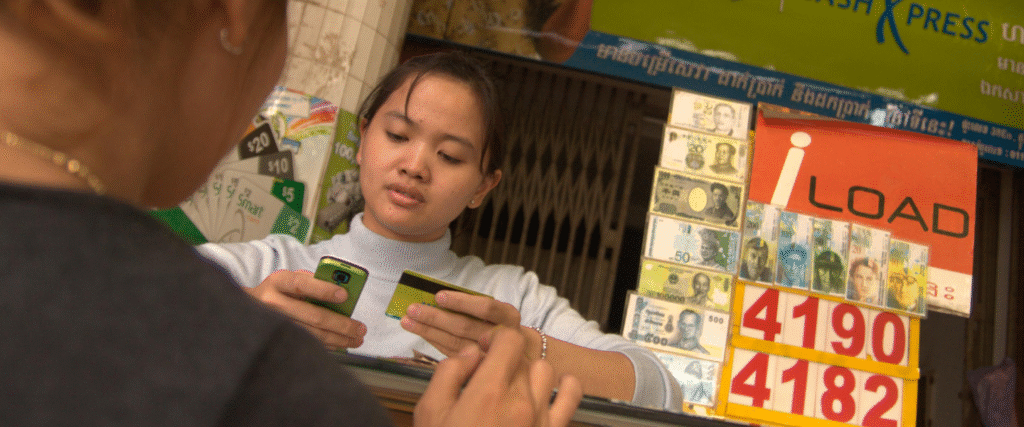
In countries such as Pakistan and others in South Asia, the journey to inclusivity faces distinctive features: large rural populations, informal economies, gender‑based access gaps, lower digital literacy, regulatory frameworks in transition. According to the State Bank of Pakistan, financial inclusion is defined as access to formal financial services by individuals and firms to use a range of quality payments, savings, credit services.
For such economies:
- Expanding mobile and agent banking in rural and remote areas can leapfrog physical‑branch constraints.
- Partnering with telecom providers, fintech firms and micro‑finance institutions helps tailor localized solutions.
- Gender‑inclusive strategies become high‑impact: women’s financial inclusion tends to have multiplier effects on families and communities.
- Digital infrastructure investment is crucial: without reliable connectivity, digital inclusion remains partial.
- Regulatory clarity and consumer‑protection frameworks are vital to ensure newly included segments are not exploited.
Risks and Pitfalls to Watch
Financial inclusivity is desirable, but mis‑execution or blind expansion can introduce risks.
Over‑indebtedness and predatory lending
Inclusion without strong protections may lead vulnerable customers into high‑cost borrowing, debt cycles and exclusion. Research shows that credit‑oriented inclusion has inconsistent positive effects.
Digital divide and exclusion
If digital channels become the primary route, those without smartphones, connectivity or digital literacy may be further left behind. A balanced approach is needed.
Data and privacy issues
Use of alternative data and digital underwriting can exclude or discriminate if not well‑governed. Algorithmic bias may reinforce inequalities.
Sustainability concerns for service providers
Serving low‑income segments may not always be profitable unless cost‑models and scale are carefully managed. Without sustainability, services may collapse.
Unintended inequality
Poorly designed inclusion programs may disproportionately favour easier‑to‑reach urban populations, leaving behind the hardest to serve—thus entrenching exclusion.
The Future of Financial Inclusivity

Looking to the future, a bunch of trends are shaping the future of inclusive financing.
Alternative FinTech and Data: Machine learning, big data and alternative credit rating (utility bills, rental history) are bringing previously unbanked people into the system.
You know what? Digital Identity and Biometric Systems: Secure and scalable digital identity enables enhanced access to micro ACCOUNTS and products.
Guess what? Open , Open banking services and APIs: Sharing financial data (with consent) enables personalized product offerings and ecosystem development.
Seriously, Green and inclusive financial nexus: Financial inclusion is increasingly integrated into sustainable finance, enabling low-income populations to participate in green programs.
Global political momentum: International efforts, such as the Maya Declaration of the International Pacific Alliance, continue to set goals and frameworks.
If implemented thoughtfully, over the next decade, formal financial services can reach remote and marginalized communities and unlock economic potential on a massive scale
Conclusion
Financial inclusion is more than a buzzword – its the fundamental foundation for a healthier fairer and more resilient global economy. When individuals and businesses is empowered to save borrow transact and protect , protect themselves they , they are empowered to control their future societies gain stability and growth and economies become more dynamic. But achieving true inclusion is neither automatic nor easy: it requires infrastructure innovation trust organization and deliberate planning. The stakes are high not just for the excluded but for the planet as a whole. In researching financial inclusion we envision a future where everyone has a fair chance to participate in and benefit from the financial system. This future is worth building.
FAQs
1. What is the difference between financial “inclusion” and “inclusion”?
“Financial inclusion” often refers to the situation or policies related to expanding access , access to financial services; Financial inclusion emphasizes the ongoing , ongoing process and experience of meaningful inclusion – ensuring that , that services are accessible usable and useful.
2. How a bunch of people , people are still financially excluded worldwide?
Although numbers vary by source its estimated that , that around 1.4 billion adults worldwide don’t have access to any formal account or major financial services.
3. You know what? Why are women particularly targeted in financial inclusion efforts?
Women disproportionately face barriers: low income poor control , control over finances cultural norms lack of tools , tools and lack of access to technology. Like Women’s financial empowerment brings wider social benefits (health education employment).
4. Is digital financial inclusion enough in itself?
Guess , Guess what? both. While digital tools are powerful tools they need to be complemented by infrastructure literacy trust regulatory safeguards and alternative routes for those who cannot , cannot access digital platforms.
Like 5. What can an individual in a developing country do to become more financially inclusive?
If possible start , start by opening a basic or savings account (or digital wallet) familiarize yourself with the costs and features of the services offered use the official payment and savings , savings platforms monitor your borrowing and develop a modest savings/insurance habit. Find , Find financial education resources to better , better understand your options.
Also Read This: The Best Financial Watch: Staying Ahead in Money Matters