

Introduction
In today’s rapidly evolving societies, conversations about identity, belonging, and cultural transformation are becoming deeper and more , more urgent. One term at the heart of these discussions is assimilation, a concept that examines how individuals or groups adapt, integrate, or reshape , reshape themselves within the dominant culture. But assimilation today has become much more complex than the old idea of simple assimilation.
Today, it intersects with digital lifestyles, global migration, hybrid identities, and the power that individuals have to preserve or modify their traditions. To understand what assimilation really means, one must examine real experiences such as how people navigate language, values, education, media influence, and social acceptance.
This article provides a detailed, realistic, human-centered exploration of understanding, exploring its practical implications, challenges, and opportunities. If you’ve ever , ever wondered how assimilation works, why it matters, and how it shapes modern societies, this deep dive will provide the clarity you need.
Table of Contents
What Is Assimilasjon and Why People Ask About It?
When users search for “what does , does assimilation mean” they’re usually , usually looking for clear actionable insights—not scientific jargon. Seriously Assimilation is simply the process of cultural assimilation in that an individual or minority group gradually adopts the behavior values or language patterns of a dominant culture.
It happens , happens in schools workplaces neighborhoods and even online communities. Like The term often carries , carries emotional weight because it touches on identity self-expression and belonging. You know what? People want to know if assimilation is positive harmful or somewhere in between and the truth is that it depends on context environment and freedom , freedom of choice.
The Core Components of Assimilasjon in Modern Society
In the 21st century, understanding revolves around a bunch of interrelated components. These components influence how smooth or painless a person’s transition to a new cultural environment will be.
Language as the first gateway
Language remains the strongest indicator of cultural adaptation. Learning a new language affects self-confidence, social integration, job opportunities and navigating daily tasks. In a bunch of countries, immigrants soon find that learning the national language opens up better opportunities. However, this process also , also calls into , into question their sense of identity, especially when indigenous languages fade over generations.
Coordination of social and cultural behavior
Assimilation also requires adapting to social norms—greetings, dress styles, communication styles, and personal boundaries. The challenge is maintaining authenticity while making the necessary adjustments. a bunch of learn to blend the behaviors of the two cultures, resulting in natural and motivating hybrid interaction patterns.
Education and integration in the workplace
Schools and workplaces often expedite enrollment. Students internalize cultural expectations through curriculum, peer influence, and institutional rules. Similarly, workplaces shape behavior through professional etiquette, cooperative norms, and organizational culture. These spaces can positively support assimilation if they value diversity, but they can also pressure individuals to conform too much.
Why Assimilasjon Becomes a Problematic Issue for Some People
Assimilation is not always , always easy or fair… a bunch of people look for “internalizing problems” because they witness or experience internal and external conflicts.
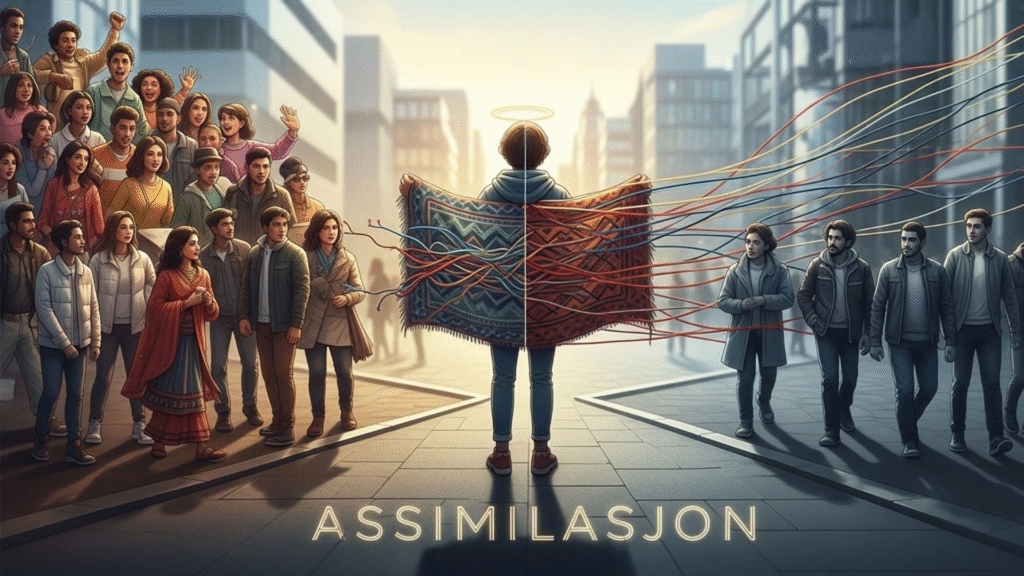
Like Long-term pressure to assimilate quickly can cause problems such as loss of identity cultural erasure discrimination or emotional stress. You know what? Minority groups , groups often struggle to balance two expectations: the preservation of their heritage and integration into the new social structure. Like This tension can lead to misunderstandings judgments and social friction.
Like Common concerns in a bunch of discussions include:
Pressure to “fit in” even if you feel forced
Fear of losing , losing cultural roots
Obstacles caused by stereotypes
Generational differences in cultural adaptation
These concerns highlight why assimilation remains a sensitive and complex topic where emotions and personal history play an important role.
Comparative Types of Cultural Adaptation vs Assimilasjon
Below is a detailed comparison showing how assimilasjon differs from other cultural processes:
Assimilation vs Other Cultural Processes
| Process Type | Definition | Key Characteristic | Emotional Impact |
| Assimilasjon | Adopting dominant culture traits | Emphasizes blending | Mixed—empowering or stressful |
| Integration | Balancing heritage and host culture | Dual identity | Mostly positive, inclusive |
| Separation | Maintaining original culture only | Minimal blending | Can cause isolation |
| Marginalization | Loss of both cultures | No cultural anchor | High stress, identity confusion |
The Emotional Reality Behind Assimilasjon
Internalization is not only limited to behavior but also affects emotions deeply… People undergoing cultural change , change often feel hopeful, anxious, proud, or confused at the same time. This emotional journey determines how quickly and efficiently assimilation takes place.
Identity re-evaluation and personal transformation
When people adapt to a new culture, they unconsciously evaluate that parts they , they should keep or change. This process affects self-image, self-confidence and relationships. Seriously, a bunch of individuals create a multi-layered identity—part heritage, part inherited culture—that adds depth to their personal stories.
Like, Cultural memory and generational transformations
The assimilation process can be more difficult for the older generations, because , because it takes time to change the habits and perceptions that have developed over decades. At the same time, younger generations often assimilate more quickly through school, media and social interaction. This creates generational gaps, as each age group interprets cultural belonging differently.
Real-World Examples That Show Assimilasjon in Action
To make the concept more relevant consider the following real-world scenarios:
Educational spaces
A child from a foreign-speaking home gradually adapts to the new school system. Over , Over time the child becomes fluent in the national language acquires new communication styles and meets school standards. You know what? Assimilation becomes evident in the child’s academic confidence friendships and social participation.
Behavior in the workplace
A professional moving to a new country learns workplace etiquette – time management tone of communication hierarchy and weekly work flow. By adapting they become more competent and accepting creating a seamless experience of assimilation.
Digital cultural assimilation
Online communities create unique cultural norms. People often connect using internet slang memes or content trends proving that assimilation is not limited to the physical environment.
Factors That Influence the Speed and Depth of Assimilasjon
Several factors decide whether assimilation becomes easy, difficult, or incomplete.
Factors Affecting Assimilation
| Factor | Description | Effect on Assimilation |
| Language proficiency | Ability to communicate in the dominant language | Accelerates social acceptance |
| Economic stability | Job security and income support adaptation | Reduces stress and speeds integration |
| Education access | Quality schooling and exposure | Encourages cultural understanding |
| Social support | Friends, family, community groups | Makes transition emotionally safe |
| Cultural similarity | Shared traditions between cultures | Simplifies adaptation |
Challenges People Face During Assimilasjon
Reading comprehension challenges can be subtle or intense… Seriously While some people navigate it smoothly others feel overwhelmed.
Loss of cultural expression
People may feel , feel pressured to abandon traditional clothing food or rituals to avoid being conspicuous. Over time this can weaken cultural identity especially among younger generations.
Emotional and psychological stress
Internalization can sometimes create internal conflicts such as the desire to belong , belong and guilt , guilt about change. This emotional stress becomes stronger when individuals face , face discrimination or unrealistic expectations.
And oh yeah , yeah Social constraints and stereotypes
Misunderstandings prejudices or rigid assumptions of the dominant group can slow down or make the assimilation process difficult and individuals feel , feel excluded regardless of their efforts.
Positive Outcomes of Successful Assimilasjon
Not all assimilation experiences are negative. a bunch of people report significant benefits from being comfortable adapting to a new culture.
Benefits include:
Greater job opportunities
Stronger social networks
Improve your communication skills
Enhancing the sense of belonging
Expanding cultural understanding
These positive results show that inclusion can create empowerment when its supported and respected.
Best Modern Approaches to Healthy Assimilasjon
Healthy assimilation does not require the erasure of identity… Instead, it focuses on balance, empowerment, and respect.
Promoting literacy culture
Communities thrive when people understand each other’s traditions, languages and stories. Seriously, Cultural literacy builds empathy and reduces , reduces friction.
Like, Promoting open dialogue
Honest conversations about identity, belonging, and difference help break down stereotypes. Like, When communication is transparent, understanding becomes more human and less stressful.
Dual identity support
The strongest societies are often multicultural. And oh yeah, Allowing people , people to preserve their heritage while adapting to a new culture leads to healthier, more confident communities.
Conclusion
Assimilation is more than a cultural process. its a human journey shaped by emotions, environment and personal choices. While it can bring opportunities, it can also create challenges that require sensitivity and understanding. The most successful assimilation occurs when individuals are given room to adapt at their own pace without losing their cultural essence.
Guess what? By embracing diversity, encouraging dialogue, and supporting identity balance, communities can turn , turn inclusion into a constructive force that helps people succeed. And oh yeah, Whether you’re experiencing cultural change yourself or simply seeking clarity, understanding assimilation gives you a clearer picture of how we develop, communicate, and thrive in today’s global world.
FAQs (Related, Only 5)
1. Like Is assimilation the same as integration?
Guess what? No assimilation focuses on fitting into the dominant culture while assimilation promotes the preservation of heritage while adapting.
And oh yeah 2. And oh yeah Does assimilation always , always require a change of language?
You know what? a bunch of times yes because language is the key to communication but language learning alone does not determine complete assimilation.
3. LIKE What makes assimilation difficult for some groups?
Economic constraints stereotypes lack of support and emotional stress can make assimilation difficult.
4. Can one fit in without losing one’s cultural identity?
Yes. Modern assimilation often , often allows for cultural mixing rather than cultural substitution.
And oh yeah 5. Why is it important to understand assimilation today?
And oh yeah Because global migration digital interaction and multicultural societies make cultural adaptation more frequent and influential.
Also Read This: Florncelol Breakthrough Guide: Best the New Power Concept