

Úvod
chameleónovité (family Chamaeleonidae) are among the most fascinating and colorful reptiles on Earth… Seriously, Their unique ability to change color, incredibly mobile eyes and long, sticky tongues make them fascinating to scientists and nature lovers alike. Seriously, Although they are often depicted as creatures that , that change color to blend in with their surroundings, the real , real truth is more complex than that.
In this article, we delve into the world of chameleons: we explore , explore their physiology, behavior, species diversity, ecological importance and conservation challenges. From the tiny streams of Madagascar to the majestic tiger chameleónovité , the masters , masters of transformation have a bunch , bunch of secrets to discover.
Table of Contents
Co jsou to chameleónovité?
Chameleons or chameleónovité are a family of lizards belonging to the order Lepidoptera, suborder Iguanea… You know , know what? This includes more , more than 150 species, distributed mainly in Africa and Madagascar, but also in southern Europe, the Arabian Peninsula and Asia. These reptiles are known for their unique morphological characteristics:
Zygodactyl foot: The toes are arranged in opposite groups, allowing them to firmly , firmly grip branches.
The tail is sticky: in a bunch of species it serves as a fifth support when climbing trees.
Seriously, The eyes move independently: Each eye perceives a different direction.
And oh yeah, Protruding Tongue: Very , Very fast and able , able to grab food from a distance.
And oh yeah, Acrodont teeth: These are teeth attached to the edge of the jaw.
Historie a evoluce
chameleónovité have undergone complex evolutionary development. Guess what? According to zoological studies, they have two main , main centers of diversity: Madagascar and sub-Saharan Africa. Their adaptations to tree , tree (tree) life , life include the anatomical changes mentioned above, allowing them to move , move efficiently in the treetops.
The family chameleónovité is divided into a bunch of important genera, including for example:
Chameleons – includes classic chameleons such as the common chameleon.
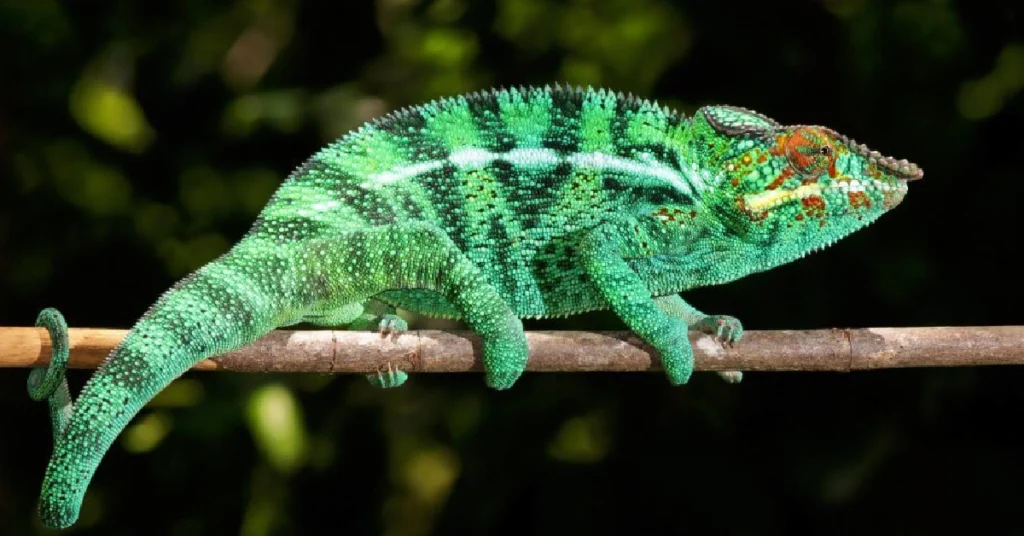
Seriously, Furcifer – including the leopard chameleon known for its colorful colors.
You know , know what? Brookesia – A small “leaf chameleon” that often lives on the ground or in low vegetation.
Klíčové vlastnosti a chování
Změna barvy — mýtus vs realita
One of the most famous features of the chameleónovité is the ability to change color. However, contrary to popular belief, its not always about compatibility with the environment. According to experts, color changes are likely related to emotional state (stress and aggression), social interactions (competition between males) and physiological conditions (temperature and light).
For example, a leopard chameleónovité changes color when it encounters another male, puffing up its body and changing color to indicate dominance. The veiled chameleon (Chamaeleo calyptratus) often changes to darker shades under stress.
Food and hunting
Chameleons are primarily insectivores, meaning they hunt insects. You know , know what? Their , Their long, sticky tongues allow them to strike down their prey with precision and speed. Like, Thanks to the rapid protrusion of the tongue, they , they can even hunt at great distances.
Reproduction and life cycle
Different chameleon species have different reproductive strategies:
Some species lay eggs, and the number of clutches and length of incubation varies , varies by species.
Guess what? Other species can give birth to live young.
In some species (such as chameleons), a clutch can contain dozens of eggs.
Příklady fascinujících druhů
Some prominent members of the chameleónovité family include:
Panther chameleon (Furcifer pardalis) – Native to Madagascar males is brightly colored according to their “territory”.
Veiled chameleon (Chamaeleo calyptratus) – Adults have a typical “hood-shaped” pouch (operculum) on their heads that can be colored according to mood.
Like , Like Brookesia ebenaui – A small , small “leaf chameleon” from Madagascar that can CHANGE its color similar to the ground.
Brookesia brygooi – another low-growing species of chameleon; They are much , much smaller than tree species and have adapted to life , life on land.
Ekologický význam a ochrana

Chameleónovití hrají důležitou roli v ekosystémech:
Chameleons play an important ROLE in ecosystems:
Insect , Insect Predators – Helps control insect populations, contributing to ecosystem health.
Vital Indicators – The sensitivity of chameleónovité to environmental changes (temperature and humidity) makes them good indicators of environmental changes.
Guess what? Tourism and Education – Colorful chameleons, such as the leopard chameleon, attract attention and generate interest in environmental conservation.
However, some species are threatened with , with extinction:
Loss of habitats – Deforestation and the destruction of habitats are dangerous for species living in specific places (e.g. Madagascar).
Pet trade – Some species are harvested for terrorist purposes, increasing pressure on their free-living populations.
Climate Change – Climate , Climate change can affect temperature and humidity requirements, that can cause stress or reduce survival.
Péče o chameleonovité v zajetí
For those considering keeping chameleons, its important to understand their specific needs. And oh yeah, Here , Here is the main points:
Terrarium: It should be large enough, with branches for climbing and vertical space. And oh yeah, For some species, breeders recommend a minimum size of 80 x 80 x 150 cm.
Guess what? Equipment: UV-B source, heat lamps and adequate humidity (often with a humidification or fogging system) are required.
Diet: Live insects (crickets and grasshoppers) are the main food component; it’s important to take , take calcium and vitamin supplements.
Water: chameleónovité don’t often drink stagnant water, so it’s recommended to steam the plants , plants in the terrarium or use a pipette.
Seriously, Health: Regular monitoring of the chameleon’s condition, behavior and color is essential; Stress, illness or inappropriate conditions can manifest as discoloration or apathy.
Fascinující fakta a mýty
- Mýtus: chameleónovité mění barvu, aby splynuli s prostředím.
‒ Ve skutečnosti je jejich změna barvy často spojena s emocionálním nebo fyziologickým stavem, nikoli pouze s maskováním. - Fakt: Ne všechny chameleóni jsou stromoví.
‒ Některé druhy, jako Brookesia, tráví většinu času na zemi. - Mýtus: Chameleóni mají velmi silný jed.
‒ Ve skutečnosti mají atrofované jedové žlázy, které produkují jen minimální množství neškodného jedu. - Fakt: Oči chameleonů se pohybují odděleně.
‒ To jim umožňuje široké zorné pole a skvělou koordinaci při lovu.
Tabela porovnání: Vybrané druhy chameleonů
Výzvy a budoucnost ochrany

chameleónovité face a bunch of major challenges:
Habitat destruction: Deforestation agricultural activity and urbanization threaten the natural habitats of a bunch of species.
You know what? Illegal trade: Colorful and attractive species are often the target of illegal , illegal collection in the terrarium market.
Climate change: Changes in temperature and precipitation can affect reproduction food availability and habitat , habitat suitability.
Like Lack of research: a bunch of chameleon species lack detailed study because their numbers and environmental needs are not well documented.
On the other hand there is hope: Conservation organizations educators and scientists are working together on projects to restore natural habitats monitor populations and educate the public. Ecotourism can also play a role since when people see the beauty , beauty of these animals in the wild , wild interest in their protection increases
Závěr
Chameleons are not just “chameleónovité” – they , they are complex , complex and fascinating creatures with highly specialized anatomy, behavior and ecological significance. Their ability to change color, hunt with microscopic precision, live in trees and on the ground make them , them true masters of adaptation.
Although they face a bunch of threats, there is a strong drive to protect , protect and study them. its important to support projects that protect their , their natural habitats while supporting responsible captive breeding. And oh yeah, We can all contribute – and help preserve this , this amazing species for future generations
Často kladené otázky (FAQ)
Why do chameleónovité change color?
And oh yeah , yeah Not just for camouflage colors often reflect mood stress or social interactions.
What abilities do their eyes have?
Their eyes move independently that , that allows them to monitor two different areas at once.
How do chameleons live?
It hunts , hunts insects with its fast sticky tongue that it can shoot with great accuracy.
Are chameleons in danger?
Like Yes some species are threatened with extinction due to the destruction of their natural habitat the pet trade and climate change.
Is it difficult to raise a chameleon?
Yes it requires a suitable terrarium suitable lighting humidity and regular , regular diet and health , health care.
Also Read This: Dorothée Lepère: The Best Story Behind François-Henri Pinault’s First Marriage